The Origins of Line Dancing: A Journey Through Time
July 6, 2024
The Origins of Line Dancing – A Journey Through Time
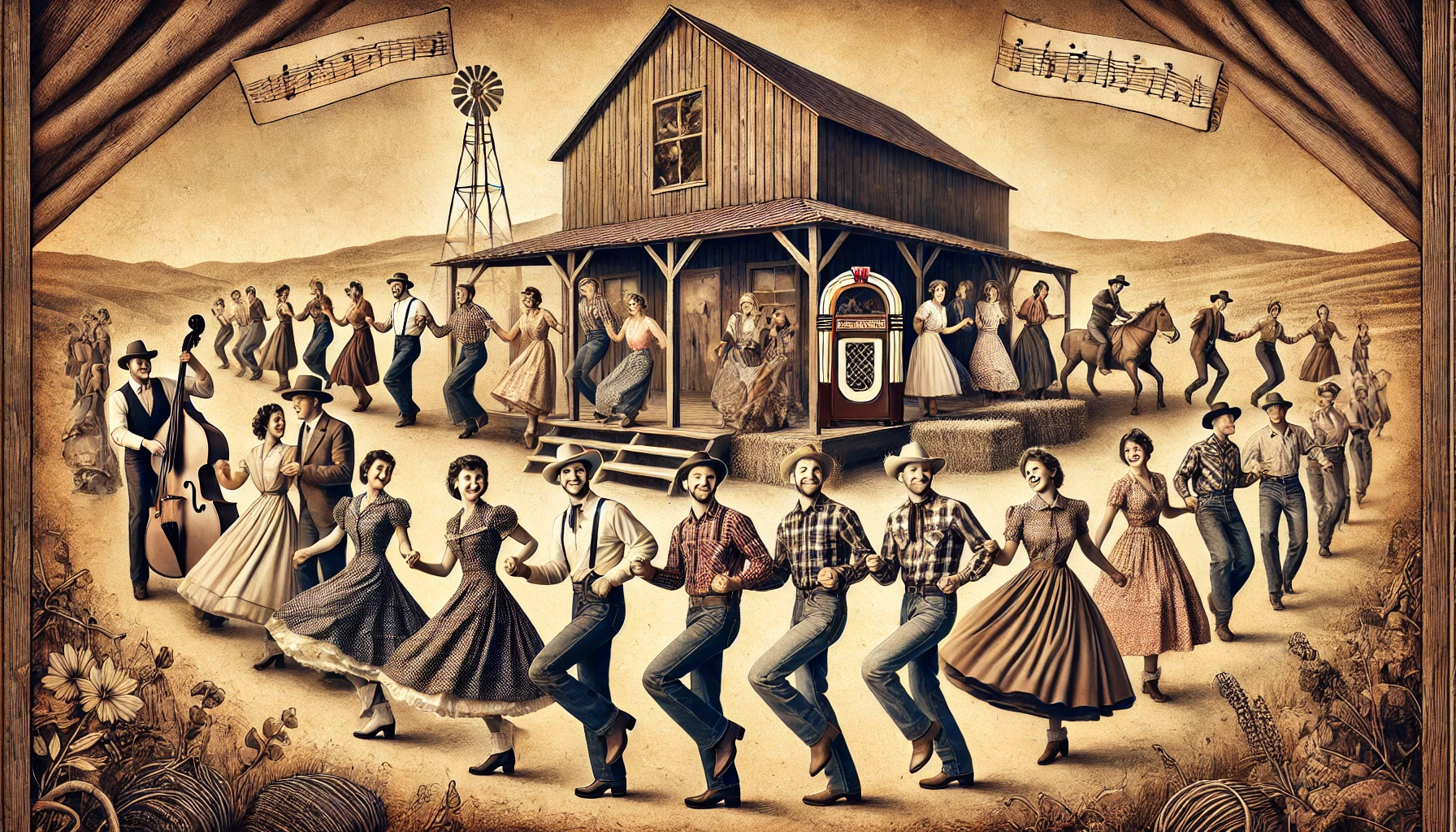
Line dancing has a rich and fascinating history rooted in traditional folk dances. While its modern form developed during the 20th century, its foundations go back to social dances where people moved together in lines and patterns.
Today, line dancing is a global phenomenon. However, its journey from local gatherings to international festivals is what makes it truly unique.
From Folk Traditions to Early Social Dance
The earliest influences of line dancing can be traced back to European folk traditions. In these dances, people gathered in groups and moved in synchronized steps.
When European settlers arrived in North America, they brought these traditions with them. Over time, these dances evolved and blended with new cultural influences.
For example, forms of country dancing and contra dancing helped shape the idea of structured group movement. While these are not line dancing in the modern sense, they played an important role in its development.
The Rise of Modern Line Dancing
Modern line dancing began to take shape in the 20th century. In particular, the 1970s and 1980s were key decades.
During this time, social dance culture expanded rapidly. Disco music introduced synchronized group dancing, while country and western music scenes embraced choreographed routines.
As a result, line dancing became more structured and widely recognized. It started to appear in dance halls, clubs, and community events.
Line Dancing Goes Mainstream
In the early 1990s, line dancing reached a global audience. One of the most iconic moments came with the release of *Achy Breaky Heart* by Billy Ray Cyrus.
The dance associated with the song became hugely popular and introduced line dancing to millions of people worldwide.
Because of this, line dancing moved from niche communities into mainstream culture. It became a social activity enjoyed across different age groups and backgrounds.
Line Dancing Comes to Iceland
Line dancing first appeared in Iceland in the early 1990s. At that time, American personnel stationed at the U.S. Naval Air Station in Keflavík introduced the dance while socializing at the base. They later demonstrated line dancing on Icelandic television, most likely around 1993 or 1994.
Shortly after, a young Icelandic dance instructor, Jóhann Örn Ólafsson, visited the base in 1994. There, he met the group and learned his first line dance steps and routines. After several visits, Jóhann and his friend Siggi began performing small demonstrations at various events in Reykjavík and across the country.
In the summer of 1995, they held their first line dance workshop, which attracted strong interest and marked the beginning of organized line dance teaching in Iceland.
Not long after, Óli Geir Johannesson also began teaching line dancing. Since then, both Jóhann and Óli Geir have continuously taught and developed the line dance scene in Iceland. They have organized numerous events together and are now the main organizers of the Iceland Line Dance Festival.
From these early beginnings, line dancing in Iceland has grown into a vibrant and international community.
A Global Dance Community
Today, line dancing is practiced all over the world. It is no longer limited to country music. Instead, dancers perform to pop, rock, Latin, and many other genres.
In addition, new choreography is constantly being created. This keeps the dance fresh, modern, and exciting.
As a result, line dancing has developed into a global community. Dancers connect through festivals, workshops, and social events across continents.
Why Line Dancing Continues to Grow
There are several reasons why line dancing remains so popular:
* It is easy to learn and accessible for beginners
* You do not need a partner
* It combines music, movement, and social connection
* It is suitable for all ages
Because of these factors, line dancing continues to attract new dancers every year.
Timeline of Line Dancing
- Pre-1900s** – European folk dances and group traditions
- Early 1900s** – Social and country dances develop in the United States
- 1970s–1980s** – Disco and country scenes shape modern line dancing
- 1990s** – Line dancing goes mainstream with global hits
- 2000s–Today** – Worldwide growth and international festivals
Experience Line Dancing in Iceland
If you want to experience line dancing at its very best, the Iceland Line Dance Festival offers something truly special.
Here, dancers from around the world come together to learn, connect, and share their passion. In addition, the festival combines world-class instruction with the unique experience of Iceland’s nature and culture.
Whether you are a beginner or an experienced dancer, this is your chance to be part of the global line dance community.
👉 Join us and experience line dancing at the top of the world.